01Industrial Cold Stores and Refrigeration Units: The Standards of the Future
A modern cold store is no longer just a "cold room". It is a complex, high-tech engineering facility in which precise control of temperature, humidity and airflow is the main guarantee of product safety.
02What Deserves Special Attention During Design?
A successful refrigeration facility starts with correct engineering calculations. Investors and project designers must take several critical factors into account:
- Strict industry standards: when designing specialized facilities (for example, pharmaceutical warehouses), compliance with GDP (Good Distribution Practice) standards is mandatory. This requires continuous, documented monitoring of the temperature regime and absolute system reliability.
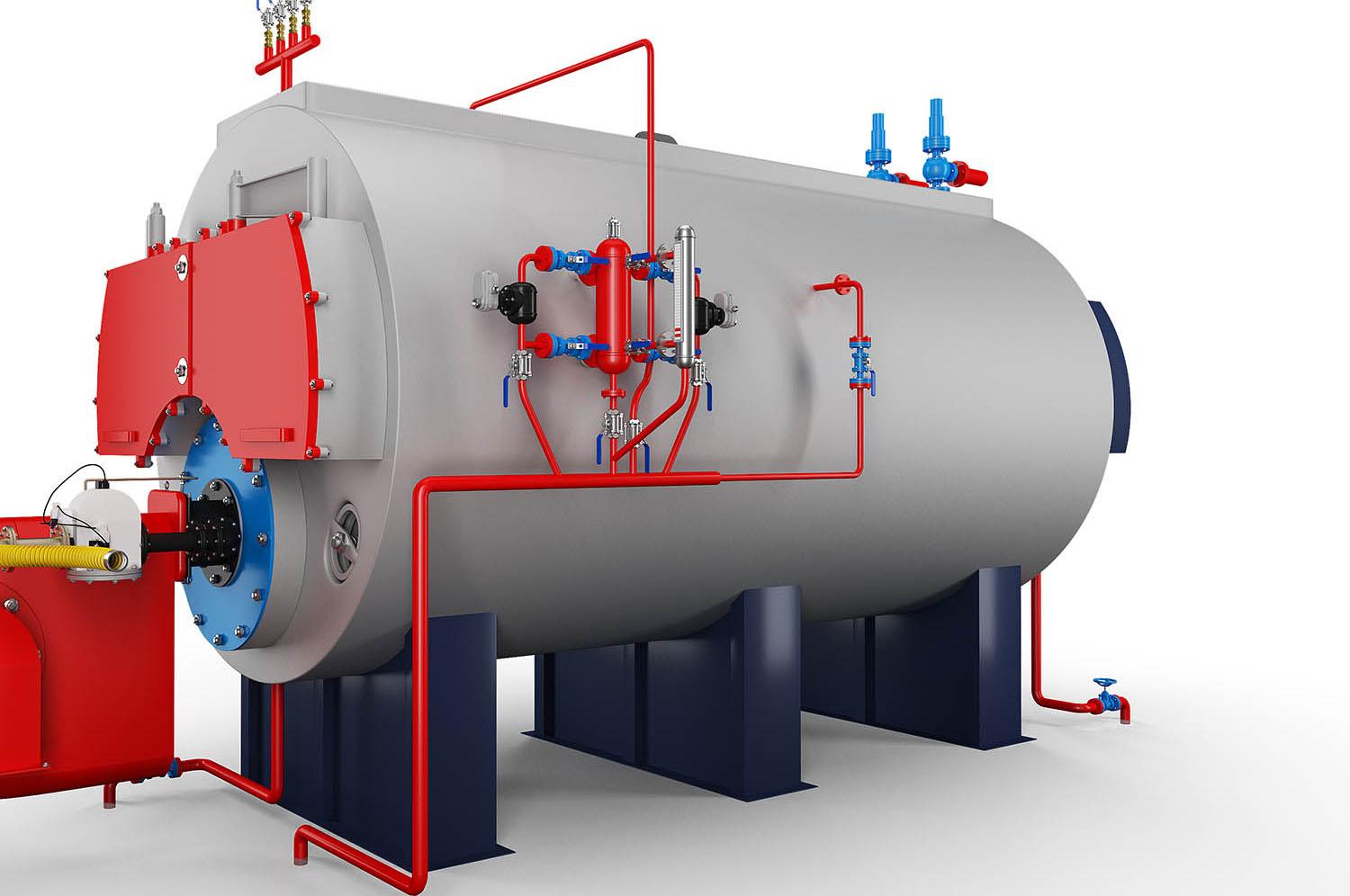
- Accurate calculation of capacity and system architecture: selecting a compressor alone is not enough. In large warehouses, what works is the proper integration of high-capacity chillers, large buffer tanks and a correctly designed network of ventilation ducts (duct layouts), so as to eliminate "dead zones" and temperature fluctuations.
- Airflow stability: for best results, commercial-grade CAV (Constant Air Volume) regulators are often integrated into the ventilation system, ensuring a constant and even supply of air to the chambers.
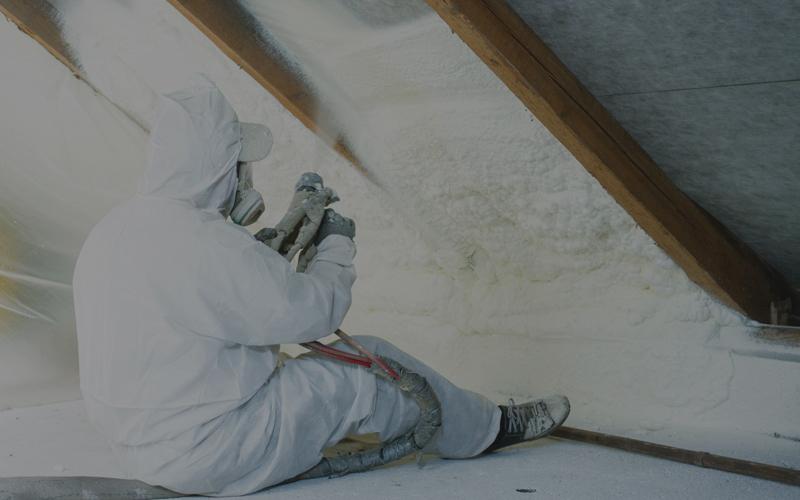
- Thermal insulation: high-density PIR or PUR sandwich panels are used for the chamber walls, reducing heat losses to a minimum.
03Advantages and Disadvantages
Like any technological solution, modern refrigeration systems have their own specific features:
| Characteristic | Description |
|---|---|
| Advantages | Energy efficiency: modern inverter compressors save up to 30% of electricity. / Centralized control: full integration with BMS (Building Management System) networks. / Product safety: temperature maintained to an accuracy of 0.1°C. |
| Disadvantages (challenges) | High initial capital: modern automation and high-quality units require a substantial investment. / Complex servicing: requires highly qualified engineering staff for service and monitoring. |
04Leading Manufacturers and Industry Leaders
Successful businesses in the market choose only time-tested brands. The system consists of two main parts:
- Outdoor units (compressors and condensers): products from giants such as Bitzer (Germany), Copeland (USA) and Danfoss (Denmark) are regarded as the industry standard. Their units withstand extreme loads and operate without interruption.
- Indoor units (evaporators) and insulation: Güntner and Alfa Laval lead in efficient air cooling, while in thermal insulation the sandwich panels of Kingspan and Ruukki are recognized worldwide.
Best practice: modern pharmaceutical hubs and large distribution centres use redundant systems. For example, when the main chiller undergoes scheduled inspection, the system automatically starts the standby unit, while large buffer tanks maintain the cold reserve in the system during the transition, which completely eliminates the risk of product spoilage.
05How Are Refrigeration Units Integrated with a BMS (Building Management System), and What Are the Benefits?
Integrating refrigeration units with a BMS (building management system) is the step that turns isolated refrigeration equipment into part of a single, "intelligent" building organism. This is especially critical for large industrial facilities, where chillers, CAV and VAV regulators, ventilation and heating systems all operate at the same time.
How Integration Works: The Technical Side
Integration is carried out using a common communication language — protocols. The most widely used standards are:
- Modbus (RTU / TCP-IP): the industrial standard. A robust, simple and reliable protocol used by most refrigeration units for data transmission.
- BACnet: a protocol designed specifically for building automation. It makes it easy to link cold rooms with ventilation and fire safety systems.
Physical connection: the controller of the refrigeration unit (for example, a Bitzer or Danfoss compressor) is connected by a dedicated cable to the BMS central processor or network switch. The BMS reads the controller's data (temperature, pressure, motor speed) and sends control commands back.
Key Benefits of BMS Integration
| Benefit | Practical result for the investor and the engineer |
|---|---|
| Centralized control from a single point | The operator can manage all chillers, buffer tank temperatures and airflows from one screen, instead of physically going to each unit. |
| Large-scale energy savings | The BMS analyses the overall demand in the building. For example, if the temperature in the warehouse is stable, the system automatically reduces chiller capacity or switches off additional compressors, keeping electricity costs to a minimum. |
| Proactive service and alarm system | The system not only alerts you in the event of a failure (e.g. a refrigerant (freon) leak or a pressure drop), but also detects the warning signs of a problem. The operator is notified that a compressor is overheating before it actually fails, which saves you from costly equipment repairs and product spoilage. |
| Data archiving and reporting | Pharmaceutical and food facilities are required to keep a history of the temperature regime (GDP standards). The BMS automatically stores temperature charts collected over months and years, which are easy to present to auditors. |
| Synergy with other systems | In the event of a fire alarm, the BMS can automatically shut down ventilation ducts and refrigeration units to prevent the spread of fire. |
An integrated BMS is the essential component that distinguishes a modern, reliable cold store from a mere cold space.
06What Alternative Methods Are Used for Precise Temperature Monitoring and Control in Small Cold Rooms and Industrial Refrigeration Chambers Without a BMS?
In small industrial refrigeration chambers, installing a full BMS is often not financially justified, yet precise temperature control and data recording remain critically important. In such cases, alternative methods of local automation and monitoring are used.
1. Local Microprocessor Controllers
This is the "brain" of the cold room. Industrial controllers from brands such as Dixell, Eliwell or Danfoss (for example, the ERC or Optyma series) control the unit directly.
- Function: they independently regulate compressor on/off switching, fan operation and defrost cycles based on information from temperature sensors.
- Advantage: they have a digital display for easy parameter setting and a built-in audible alarm (buzzer) that sounds when the room temperature deviates beyond the permitted range.
2. Standalone Data Loggers
When storing pharmaceuticals or other sensitive products, compliance with GDP (Good Distribution Practice) standards is mandatory, which requires continuous, documented and tamper-proof temperature monitoring.
- How it works: the logger is installed inside the chamber and records temperature and humidity to its internal memory at a set interval (e.g. every 15 minutes).
- Reliability: data is retrieved via USB, Bluetooth or Wi-Fi. The logger is independent of the refrigerator's power supply (it runs on its own battery), which rules out data loss during power failures. The system automatically generates tamper-proof PDF reports for audits.
3. IoT and Cloud Telemetry
This is an intermediate step between a local controller and a complex BMS, ideal for small and medium-sized businesses.
- Technology: a small GSM or Wi-Fi module (gateway) is installed in the chamber control panel and connected to the local controller.
- Result: data is sent in real time to the manufacturer's cloud server. In the event of a temperature deviation or a power outage, the responsible engineer or owner instantly receives an SMS, email or push notification on their smartphone, which is the best way to prevent critical failures and product spoilage.
Depending on the specifics of your facility, you can use the interactive tool below to choose the optimal monitoring system:
Selecting Cold Room Equipment
| Technology | Main purpose | Pros | Cons |
|---|---|---|---|
| Active compressor control: microprocessor controller | Connection type: local USB/Bluetooth. Temperature regulation and direct compressor control | Active protection, automatic control | Complex installation, limited memory |
| GDP / audit reporting: GDP-compliant standalone logger | Connection type: local USB/Bluetooth. Secure temperature recording and audit reporting | Easy validation, high accuracy | No control functions |
| IoT module (gateway) | Connection type: remote. Real-time remote monitoring and notifications | Constant access from anywhere | Depends on an internet connection |
07Precise Engineering Calculation of the Cooling Capacity Required for a Small Refrigeration Chamber
A precise engineering calculation of the cooling capacity (kW) required for a small refrigeration chamber involves finding the sum of all heat loads present in the chamber. The aim is to determine how much heat the unit must remove from the chamber over a given period (usually 24 hours) to maintain the desired temperature.
The calculation is based on the sum of four main components.
The 4 Critical Components of Heat Load
The total required capacity is expressed by the following formula:
This calculator will give you a basic idea; however, for a real project it is standard practice to use engineering software (for example, Bitzer Software or Danfoss Coolselector).
08Engineering Differences Between Synthetic Refrigerants, Ammonia and CO2 in Industrial Refrigeration
In industrial refrigeration, choosing a refrigerant is not just a matter of reaching the target temperature — it dictates the entire engineering architecture of the system, the piping material, safety regulations and energy efficiency.
Synthetic refrigerants, ammonia (NH3) and CO2 have radically different thermodynamic and chemical properties.
1. Ammonia (NH3 / R717): The Industrial Giant
For more than 100 years ammonia has remained the gold standard of industrial refrigeration, although its specific properties demand a rigorous engineering approach.
- Thermodynamics: it has the highest heat absorption coefficient (latent heat). An ammonia system consumes much less electricity to deliver the same capacity than one using a synthetic refrigerant (so-called freon).
- Material restrictions: ammonia is corrosive to copper and brass. Accordingly, ammonia systems use only steel or stainless steel pipes and specific, heavy-duty compressors.
- Oil management: ammonia does not mix with compressor oil, so the system requires complex oil separators.
- Safety: it is highly toxic. It requires complex safety systems: leak sensors, automatic ventilation shafts and, in some cases, water scrubbers (water absorbs ammonia in the event of an accident).
2. CO2 (Carbon Dioxide / R744): Ultra-High Pressures
In recent years, driven by environmental regulations, CO2 has undergone a huge renaissance, especially in supermarkets and large warehouses.
- Thermodynamics: it has a very high volumetric capacity. This means that compressors and pipes can be much smaller than with synthetic refrigerants or ammonia.
- Engineering challenge (pressure): CO2 systems operate at extremely high pressures. While the working pressure in a synthetic refrigerant system is 15–20 bar, in a transcritical CO2 system (in summer) the pressure can reach 90–120 bar. That is why its piping is made from special K65 alloy copper or thick-walled steel.
- Transcritical cycle: above 31°C, CO2 loses its ability to condense (it does not liquefy). In hot climates the system switches to transcritical mode, which complicates the refrigeration cycle and requires gas coolers instead of condensers.
3. Synthetic Refrigerants (So-Called Freon) (HFC/HCFC, e.g. R404A, R134a, R507): The Commercial Standard
Synthetic refrigerants are the most widespread because of their simplicity and safety.
- Engineering simplicity: they operate at low and medium pressures. They are compatible with standard copper pipes, which makes installation considerably cheaper.
- Oil management: freon mixes well with synthetic (POE) oils, which ensures easy oil return to the compressor.
- Environmental dead end: their main problem is a high global warming potential (GWP). Under European regulations (the F-Gas directive), their use is being gradually banned, which makes them unviable for new industrial projects.
Summary Engineering Comparison
| Characteristic | Synthetic refrigerant (HFC) | Ammonia (NH3) | CO2 (R744) |
|---|---|---|---|
| Working pressure | Low/medium (15–25 bar) | Medium (15–20 bar) | Extremely high (40–120 bar) |
| Pipe material | Copper | Steel / stainless steel only | Special K65 copper / steel |
| Efficiency (COP) | Medium | Highest | High (in cold climates), medium (in hot climates) |
| Toxicity/flammability | Safe | Toxic, mildly flammable | Safe (dangerous at high concentrations) |
| Initial investment (CAPEX) | Low | Very high | High |
Using the interactive panel below, you can visually compare these three systems across various parameters: